What to Expect When Filing a Personal Injury Claim in Maine
Learn how to file an emotional distress claim in Maine after an injury. Get the compensation you deserve with Hardy, Wolf & Downing.

When someone gets hurt because of another person’s mistake, life can change quickly. Accidents can lead to physical pain, lost wages, and deep emotional distress. If you find yourself in such a situation in Maine, knowing how to navigate the legal process is key.
This guide will walk you through what to expect when filing a personal injury claim in Maine. It covers the essential steps, important legal standards, and answers common questions. Understanding these details can help you seek the compensation you deserve, especially when dealing with the often complex aspects of Maine personal injury and emotional distress claims.
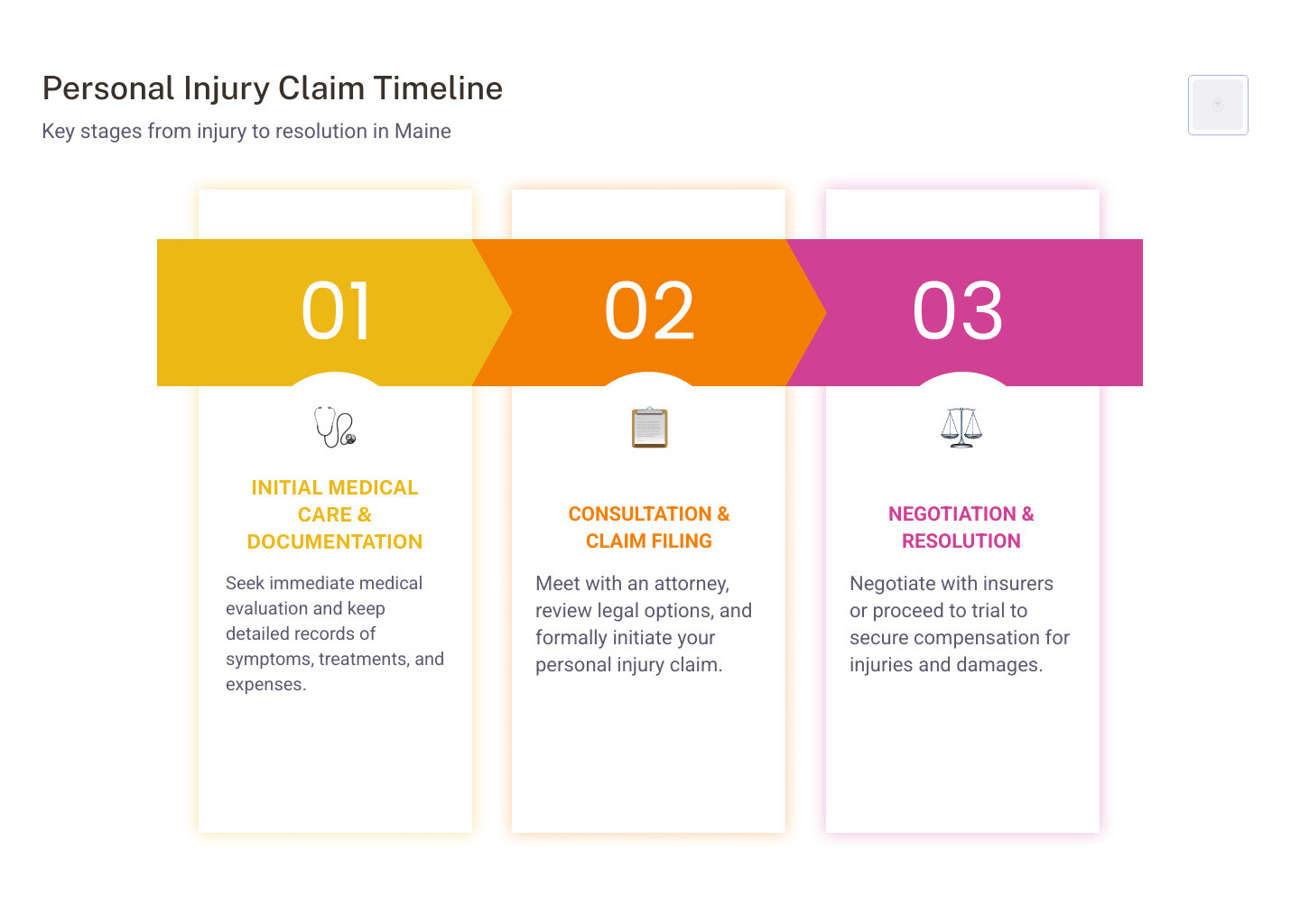
Navigating a personal injury claim can feel overwhelming, especially when you’re also dealing with the aftermath of an injury. The process typically involves several stages, from initial medical care to potential litigation. Understanding this timeline can help set realistic expectations and prepare you for the journey ahead.
Key Elements of a Valid Personal Injury Claim
To successfully pursue a personal injury claim in Maine, several fundamental elements must be established. These elements form the bedrock of any negligence-based lawsuit, including those involving emotional distress.
- Duty of Care: The first step is to demonstrate that the defendant owed you a “duty of care.” This means they had a legal obligation to act reasonably to prevent harm to others. For instance, drivers owe other motorists a duty to operate their vehicles safely, and property owners owe visitors a duty to maintain a safe environment. Understanding what constitutes a duty of care is crucial.
- Breach of Duty: Next, you must show that the defendant “breached” that duty of care. This means they failed to act as a reasonably prudent person would have under similar circumstances. This failure could be an action they took or a failure to act when they should have. For example, a driver texting while driving or a store owner failing to clean up a spill could constitute a breach.
- Causation: A direct link must exist between the defendant’s breach of duty and your injuries. This is often broken down into two parts:
- Cause-in-Fact: Your injuries would not have occurred “but for” the defendant’s actions.
- Proximate Cause: The defendant’s actions were a substantial factor in causing your injuries, and the harm was a foreseeable result of their conduct. Establishing causation is vital for any personal injury claim.
- Physical Injuries: While not always strictly required for emotional distress claims, physical injuries often provide tangible evidence of harm. These can range from broken bones and cuts to more severe conditions like traumatic brain injury or spinal cord injury. Physical injuries are generally easier to document and quantify.
- Severe Emotional Distress: Emotional distress refers to the mental anguish and psychological pain experienced due to another’s negligent or intentional actions. This can include conditions like anxiety, depression, fear, grief, and Post-Traumatic Stress Disorder (PTSD). To be compensable, the distress must be “severe,” meaning it significantly impacts your daily life and goes beyond normal, transient upset. Proving severe emotional distress is often a key challenge, as it is subjective and lacks visible physical evidence.
Steps to Take Before Filing Your Personal Injury Claim
The actions you take immediately following an incident can significantly impact the strength and success of your personal injury claim. Diligent documentation and prompt attention to your well-being are paramount.
- Seek Immediate Medical Evaluation: Your health is the top priority. Even if you don’t feel immediate pain, some injuries, like whiplash or internal injuries, may not manifest symptoms right away. A prompt medical evaluation not only ensures you receive necessary treatment but also creates an official record linking your injuries to the incident. This documentation is crucial for establishing the severity of your physical injuries and can also support claims of emotional distress. For instance, medical records can show diagnoses of anxiety, depression, or PTSD stemming from the event.
- Document Your Symptoms: Keep a detailed record of all your physical and emotional symptoms. Note the onset, duration, intensity, and any changes over time. This includes physical pain, limitations in movement, sleep disturbances, changes in mood, anxiety attacks, flashbacks, or any other psychological effects. This ongoing record provides a comprehensive picture of your suffering.
- Maintain a Personal Journal: A personal journal can be an invaluable tool for documenting the impact of the injury and emotional distress on your daily life. Describe how your injuries prevent you from engaging in hobbies, performing daily tasks, or interacting with loved ones. Detail your emotional state, fears, frustrations, and any changes in your relationships or work performance. This personal narrative can powerfully convey the extent of your suffering to a judge or jury.
- Gather Witness Statements: If anyone witnessed the incident or the immediate aftermath, their testimony can corroborate your account. Obtain their contact information and, if possible, a brief written statement. Witnesses can also provide valuable insight into your emotional state following the event, offering objective observations that support your claim of emotional distress.

Key Legal Standards for Maine Injury Victims
Maine’s civil law system, like that of other states, operates under specific rules and principles that govern personal injury claims. Understanding these standards is essential for anyone considering a lawsuit.
Personal injury lawsuits in Maine fall under the umbrella of “torts,” which are civil wrongs that cause a claimant to suffer loss or harm, resulting in legal liability for the person who commits the tortious act. These claims seek to compensate victims for their losses, known as “damages.” Damages are typically categorized as economic and non-economic.


| Damage Type | Description and other forms of emotional distress.
- Non-Economic Damages: These are non-quantifiable losses that are harder to assign a specific dollar amount. They compensate for subjective harms like pain and suffering, emotional distress, loss of enjoyment of life, loss of companionship, and disfigurement. While challenging to quantify, these damages are often a significant component of a personal injury claim and can be profoundly impactful. For instance, an individual suffering from PTSD after a traumatic event might claim substantial non-economic damages.
Maine’s Six-Year Statute of Limitations and Government Claim Rules
Understanding the deadlines and specific rules for filing a claim is critical in Maine. Missing a deadline can permanently bar you from seeking compensation.
- Six-Year Statute of Limitations: In Maine, most personal injury claims are subject to a six-year statute of limitations. This means you generally have six years from the date of the injury to file a lawsuit in court. While this may seem like a long time, it’s crucial not to delay, as gathering evidence and building a strong case takes time.
- 365-Day Notice of Claim for Government Entities: If your injury involves a government entity (state, county, or municipal), a much shorter and stricter deadline applies. You typically must file a formal written notice of claim within 365 days of the incident. Failing to provide this notice within the specified timeframe can result in the loss of your right to sue, regardless of the severity of your injuries.
- Government Entity Liability: Suing a government entity comes with additional complexities. These entities often have specific immunities or limitations on the types and amounts of damages that can be recovered.
- Sidewalk Exemption: In some cases involving injuries on public sidewalks, specific exemptions or additional requirements may apply, further underscoring the need for expert legal guidance.
Modified Comparative Negligence and Premises Liability in Maine
Maine’s legal framework includes principles that can affect liability and the amount of compensation you might receive.
- Modified Comparative Negligence: Maine follows a “modified comparative negligence” rule. This means that if you are found partially at fault for your injuries, your recoverable damages will be reduced by your percentage of fault. For example, if a jury awards you $100,000 but determines you were 20% at fault, you would only receive $80,000.
- 50 Percent Bar: A critical aspect of modified comparative negligence is the “50 percent bar.” If you are found to be 50% or more at fault for your injuries, you are completely barred from recovering any damages. This rule makes it essential to demonstrate that the other party bore the primary responsibility for the incident.
- Premises Liability: Property owners in Maine have a duty to maintain their premises in a safe condition for visitors. The extent of this duty depends on the visitor’s status (e.g., invitee, licensee, trespasser). Generally, they must address known hazards and warn of hidden dangers. Claims can arise from slips and falls, inadequate security, or other unsafe conditions.
- Duty of Care to Non-Trespassers: Property owners owe a higher duty of care to lawful visitors (non-trespassers) than to trespassers. This includes a duty to inspect the property for dangerous conditions and either fix them or warn visitors.
- Contractor Liability: In some cases, contractors working on a property may also bear liability for injuries if their negligence created or failed to address a hazardous condition.
- Recreational Use: Maine has specific laws concerning land used for recreational purposes, which can limit a landowner’s liability in certain situations.
- Rollover Accidents: While not exclusive to premises liability, rollover accidents may involve factors related to road design or maintenance, potentially giving rise to claims against government entities or contractors.
Frequently Asked Questions About Maine Injury Claims
Understanding the nuances of personal injury law, particularly concerning emotional distress, can be challenging. Here are answers to some common questions that arise in Maine accident cases.
FAQ: Common Questions on Maine Accident Law
Q1: What is emotional distress in the context of a legal claim? A1: Emotional distress refers to the mental or psychological suffering caused by another party’s negligent or intentional actions. It encompasses a range of negative emotions and psychological impacts, such as anxiety, depression, fear, grief, humiliation, and PTSD. It can be as debilitating as physical injuries, profoundly affecting daily life and relationships. For more detailed insights into the nature of emotional suffering, you can explore resources on emotional distress.
Q2: What are the different types of emotional distress claims? A2: Primarily, there are two types:
- Intentional Infliction of Emotional Distress (IIED): This occurs when a defendant’s “extreme and outrageous” conduct is intended to cause severe emotional suffering, and it does. The conduct must be so offensive that it goes beyond all possible bounds of decency.
- Negligent Infliction of Emotional Distress (NIED): This arises when a defendant’s negligent actions cause severe emotional distress. Unlike IIED, intent to cause distress is not required. However, many states, including Maine, have specific requirements for NIED claims, which often involve a physical impact, being in a “zone of danger,” or witnessing harm to a close family member. You can learn more about negligent infliction claims.
Q3: Can someone claim emotional distress damages even without physical injury? A3: Traditionally, emotional distress claims often required an accompanying physical injury. However, many jurisdictions now allow claims for severe emotional distress even without physical harm, especially in cases of IIED where the conduct is particularly egregious. In NIED cases, some states allow recovery if the emotional distress leads to physical symptoms (e.g., ulcers, headaches, insomnia), or if the claimant was in the “zone of danger” or witnessed severe harm to a close family member (the “bystander rule”). The landmark Maine case of Gammon v. Osteopathic Hospital of Maine is significant in this regard, recognizing the ability of “indirect” victims to recover damages for emotional distress under certain circumstances.
Q4: How is emotional distress typically proven in court? A4: Proving emotional distress requires compelling evidence due to its subjective nature. Key forms of proof include:
- Direct Testimony: Your own account of your emotional suffering, its impact on your life, and how it relates to the defendant’s actions.
- Expert Witness Testimony: Mental health professionals (psychologists, psychiatrists, therapists) can provide diagnoses, explain the severity of your condition (e.g., PTSD, severe depression), and link it to the incident.
- Medical Records: Documentation from doctors, therapists, and counselors detailing your treatment, diagnoses, and progress.
- Corroborating Witness Statements: Testimony from friends, family, coworkers, or others who can attest to changes in your behavior, personality, or daily functioning after the incident.
- Personal Journals: Detailed records of your emotional state, symptoms, and daily struggles can serve as powerful evidence.
Q5: What are the challenges in proving emotional distress compared to physical injuries? A5: The primary challenge lies in the intangible nature of emotional distress. Unlike a broken bone visible on an X-ray, emotional pain is internal and subjective. This can lead to skepticism from insurance companies and opposing counsel. Proving causation (that the defendant’s actions directly caused the distress) and severity (that the distress is beyond what a reasonable person would experience) requires robust evidence and often expert testimony. Insurance companies are often resistant to these claims, especially when not tied to physical injury or economic loss. You can explore more about proving emotional distress.
Q6: What are common scenarios where emotional distress claims arise? A6: Emotional distress claims can arise in various situations, including:
- Car Accidents: Even without severe physical injury, the trauma of a serious collision can lead to PTSD, anxiety, or phobias. Learn more about emotional and psychological trauma after a car accident.
- Medical Malpractice: Errors by healthcare providers can cause profound psychological trauma. Learn more about medical malpractice.
- Wrongful Death: Surviving family members often experience severe emotional distress due to the loss of a loved one caused by another’s negligence. Learn more about wrongful death.
- Workplace Harassment or Discrimination: Persistent bullying, discrimination, or retaliation can lead to severe anxiety, depression, and other psychological harms.
- Assault and Battery: Intentional physical harm almost always results in significant emotional distress.
- Defamation: False statements that damage a person’s reputation can lead to severe emotional suffering. Learn more about defamation.
- Outrageous Conduct: Any extreme and outrageous behavior that intentionally causes severe emotional distress.
Q7: How are emotional distress damages calculated? A7: Calculating emotional distress damages is complex, as there’s no fixed formula. Factors considered include:
- Severity and Duration: The intensity and length of the emotional suffering.
- Impact on Daily Life: How the distress affects work, relationships, hobbies, and overall quality of life.
- Medical Treatment: The nature and cost of therapy, medication, and other treatments.
- Physical Manifestations: Any physical symptoms resulting from the emotional distress.
- Intent of Defendant: Intentional or reckless conduct often leads to higher awards.
- Jurisdictional Caps: While specific caps on emotional distress damages are rare, many states have limits on non-economic damages, which can indirectly affect recovery.
Q8: What are potential defenses against an emotional distress claim? A8: Defendants may argue:
- Lack of Severity: The emotional distress was not severe enough to warrant a claim.
- Lack of Causation: The distress was caused by pre-existing conditions or other life events, not the defendant’s actions.
- Lack of Outrageousness (IIED): The conduct, while perhaps offensive, was not “extreme and outrageous” enough to meet the legal standard.
- First Amendment Protection (IIED): Especially in cases involving speech, defendants may argue that their actions are protected by free speech rights, as seen in Snyder v. Phelps. This requires courts to balance free speech with the right to be free from severe emotional harm. For more on the impact of Snyder v. Phelps on IIED liability, see this Yale Law Journal note.
- Consent: The plaintiff consented to the conduct.
Q9: What steps should someone take if they believe they have a valid emotional distress claim? A9: If you believe you have a claim, you should:
- Seek Medical and Mental Health Treatment: Prioritize your well-being and obtain professional help. This also creates crucial documentation.
- Document Everything: Keep detailed records of your symptoms, treatment, and how your life has been affected.
- Avoid Social Media: Refrain from posting about your case or emotional state online, as it can be used against you.
- Contact a Personal Injury Attorney: An experienced attorney can evaluate your claim, explain your rights, gather evidence, and navigate the complex legal process.
Q10: How can a personal injury attorney assist in pursuing an emotional distress claim? A10: A personal injury attorney plays a vital role by:
- Evaluating Your Claim: Determining its strength and potential value.
- Gathering Evidence: Collecting medical records, expert testimony, witness statements, and other documentation.
- Negotiating with Insurers: Advocating on your behalf to secure fair compensation, as insurance companies often try to minimize payouts.
- Representing You in Court: If a settlement cannot be reached, they will litigate your case.
- Navigating Legal Complexities: Understanding state-specific laws, statutes of limitations, and evidentiary requirements. Many personal injury lawyers work on a contingency fee basis, meaning you don’t pay unless they win your case. This makes legal representation accessible to everyone.
Summary of Key Takeaways and Next Steps
Filing a personal injury claim in Maine, especially one involving emotional distress, requires a thorough understanding of legal principles, diligent documentation, and strategic action. From establishing the core elements of duty, breach, and causation to navigating Maine’s specific rules on statutes of limitations and comparative negligence, each step is crucial. The subjective nature of emotional distress makes proving it a significant challenge, necessitating comprehensive evidence and expert testimony.
If you or a loved one is experiencing emotional distress due to another’s negligence or intentional actions, you don’t have to face this journey alone. An experienced personal injury attorney can provide invaluable guidance, help you build a strong case, and fight for the compensation you deserve. Many offer a free consultation, allowing you to understand your options without upfront cost. Taking prompt action and seeking professional legal assistance are your best next steps toward seeking justice and recovery.