How Negligence Affects A Personal Injury Claim In Nevada
Nevada personal injury claims depend on negligence, evidence, injuries, and insurance coverage. Learn how these factors may affect your legal claim.
Key Takeaways
- Negligence means failing to use reasonable care under the circumstances.
- An injured person generally must show that another party’s careless conduct caused the injury and resulting losses.
- Nevada’s comparative negligence rule can reduce compensation when the injured person shares fault.
- Evidence collected soon after a crash, fall, or other incident can strongly affect how fault is evaluated.
- Medical records, witness information, photographs, and financial documentation can help connect negligence to damages.
After an injury in Nevada, questions about negligence often determine whether a claim can move forward and how much compensation may be available. A Nevada personal injury claim guide can provide a useful starting point, but each case depends on its own facts, evidence, injuries, and insurance coverage.
Whether an incident happens during rush-hour traffic in Las Vegas, on a poorly maintained walkway in Reno, or at a business serving visitors near Lake Tahoe, the central question is often the same: did someone fail to act with reasonable care, and did that failure cause harm?
What Negligence Means In A Nevada Injury Claim
Negligence is not simply another word for an accident. It is a legal theory based on unreasonable conduct. A driver may be negligent for texting while driving, a property owner may be negligent for ignoring a known dangerous condition, or a business may be negligent for failing to address a spill in an area open to customers.
Most personal injury claims require evidence of four connected points:
- Duty of care: The other party had a responsibility to act with reasonable care.
- Breach: The other party did not meet that responsibility.
- Causation: That conduct caused or contributed to the injury.
- Damages: The injured person experienced losses, such as medical expenses, lost income, pain, or limitations in daily life.
These elements can look different from case to case. For example, a rear-end collision may involve evidence of speed, following distance, traffic signals, vehicle damage, and driver attention. A slip-and-fall claim may require evidence about the hazard, lighting, warning signs, inspection practices, and how long the dangerous condition existed.
Comparative Negligence And Shared Fault
Nevada uses a comparative negligence system. Under Nevada’s comparative negligence law, an injured person may recover damages when their negligence is not greater than the negligence of the party or parties from whom recovery is sought. However, the person’s damages are reduced by their percentage of fault.
For instance, assume a person has $100,000 in damages after a collision. If the evidence shows the other driver was 70 percent at fault and the injured person was 30 percent at fault, the damages may be reduced by 30 percent, leaving $70,000 before considering other claim-specific issues. If the injured person is found more than 50 percent responsible, recovery is generally barred under this rule.


Why Shared Fault Arguments Matter
Insurance companies and defense attorneys may examine whether an injured person was speeding, distracted, ignoring warnings, wearing inappropriate footwear, failing to use available safety equipment, or delaying necessary treatment. These facts do not automatically defeat a claim. They may, however, become part of the argument over fault allocation and damages.
The best response is accurate documentation, not guesswork. Avoid statements such as “it was all my fault” when you are injured, shaken, or still learning what happened. Stick to observable facts and allow the evidence to be reviewed in context.
Evidence That Can Establish Negligence
Evidence often fades quickly. Surveillance footage can be overwritten, damaged vehicles can be repaired, weather conditions can change, and witnesses may become difficult to locate. Taking reasonable steps to preserve information can make a meaningful difference in a Nevada claim.
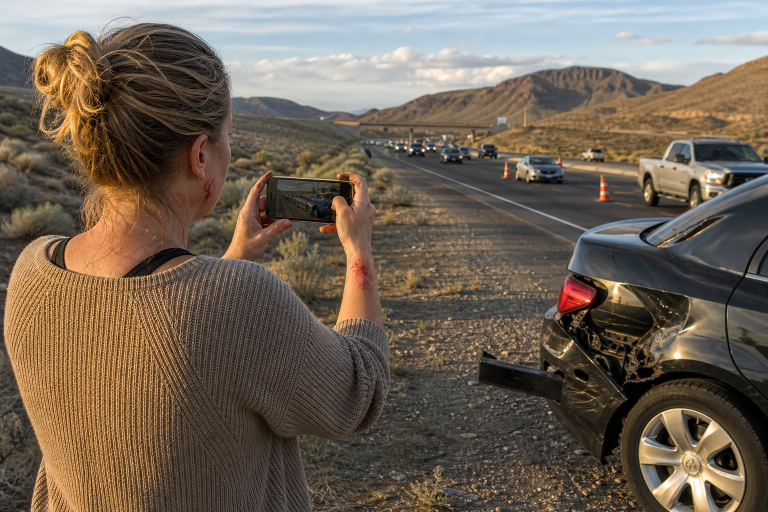
- Photographs or video of the scene, visible injuries, property damage, debris, lighting, and warning signs.
- Names and contact information for witnesses.
- Police, workplace, or property incident report numbers.
- Messages, emails, or statements made by involved parties.
- Medical records that document symptoms, diagnoses, treatment, and work restrictions.
- Receipts, wage records, repair estimates, and other proof of financial loss.
In a premises liability case, it may also help to document the exact location of a hazard, the condition of the flooring or stairs, the presence or absence of cones or warning signs, and whether employees were nearby. In a vehicle case, photographs from several angles, the crash report number, and information about nearby cameras may be important.
Medical Care And The Link Between The Incident And The Injury
Prompt medical attention protects health first, while also creating a record of reported symptoms and treatment. Some injuries, including certain head, neck, back, and soft-tissue injuries, may not seem serious in the first hours after an incident. A medical professional can evaluate symptoms and recommend appropriate care.
Follow-up care matters as well. Gaps in treatment may lead an insurer to argue that an injury was resolved sooner than claimed or was caused by something unrelated. Keep records of appointments, prescriptions, imaging, physical therapy, referrals, work limitations, and out-of-pocket expenses. A brief daily journal can also help document pain levels, sleep problems, missed activities, and changes in mobility.
How Negligence Affects Insurance Discussions
Reporting an incident to an insurer is different from agreeing on fault or accepting a settlement. When speaking with an adjuster, provide truthful basic information, but do not guess about speed, distance, injuries, or who caused the event. Ask for requests for documents or recorded statements in writing when possible, and review any release carefully before signing it.
A quick offer may not account for future treatment, continuing symptoms, lost earning capacity, or other losses that are still developing. Nevada consumers with insurance-related questions can consult the consumer resources maintained by the Nevada Division of Insurance, although the agency does not determine liability or negotiate a personal injury settlement.
Deadlines Still Apply
Negligence evidence must be preserved, but legal deadlines must also be taken seriously. Nevada law generally provides a two-year limitation period for an action seeking damages for personal injury or death caused by another person’s wrongful act or neglect. Different rules may apply to particular claims, including claims involving government entities, professional negligence, or other special circumstances. Waiting can make both deadline compliance and evidence collection more difficult.
When A Legal Consultation May Be Useful
A consultation may be especially helpful when fault is disputed, injuries are serious or permanent, multiple vehicles or businesses are involved, an uninsured driver is involved, or an insurer denies or delays the claim. Bringing photographs, reports, medical records, insurance correspondence, witness details, and proof of lost income can help create a clearer picture of the case.
Conclusion
Negligence can shape every stage of a Nevada personal injury claim, from the first insurance report to settlement discussions or litigation. Seeking medical care, preserving evidence, documenting losses, and giving careful factual accounts can help ensure that fault is evaluated on a complete record rather than assumptions.