California Lemon Law For Boats: What Owners Need To Know Before Filing A Claim
Learn how California Lemon Law may cover defective boats under warranty and what steps to take to qualify for a refund or replacement.
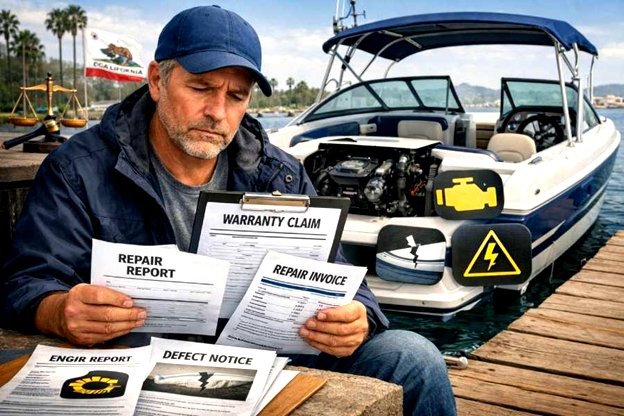
If you’ve purchased a new boat but are now dealing with ongoing mechanical issues, you might be curious about the protections provided by the California Lemon Law. Many people recognize how the Song-Beverly Consumer Warranty Act pertains to automobiles, yet fewer realize that it can also apply to specific boats and watercraft sold under warranty in California. Prior to submitting a claim, it’s crucial to understand the qualifying criteria, the necessary documentation, and how the law could assist you in obtaining a refund or replacement.
Does California’s lemon law cover boats? Eligibility, warranties, and when Song-Beverly (and Magnuson-Moss) apply
In California, consumer protection laws are applicable to lemon law boats, but qualifying depends on the method of sale and the type of warranty offered. Unlike passenger cars like the Volkswagen ID.4 or Jeep Wrangler 4xe, boats fall under the category of “consumer goods” according to the Song-Beverly Consumer Warranty Act. They may be eligible if they are bought or leased for personal purposes and come with a legitimate warranty.
- Manufacturer’s Guarantee: A clear manufacturer’s guarantee can activate Song-Beverly protections for issues related to the hull, powertrain, engine, or electrical systems.
- Dealer Guarantee: A warranty offered by a dealer or certified program can also provide legal safeguards, so it’s important to thoroughly examine the terms of coverage, duration, and usage restrictions.
- Federal Protection: The Magnuson-Moss Warranty Act enhances consumer rights by banning misleading warranty practices and permitting boat owners to recover attorney fees if they win their case.
- CLRA Safeguard: The Consumer Legal Remedies Act comes into play when a seller or manufacturer falsely represents the quality or warranty of a faulty boat.
To be eligible, a recreational boat typically needs to be acquired in California (or delivered and registered within the state) and must exhibit recurring issues during its warranty period. However, boats primarily utilized for business purposes may not be included under this coverage. Boat owners can seek assistance from the California Department of Consumer Affairs, the California Attorney General’s Office, organizations like the Consumer Federation of California, and industry entities such as the National Marine Manufacturers Association.
When statutes apply to boat lemon law claims
- Song-Beverly Consumer Warranty Act: Applies to consumer goods with express warranties; often fits a recreational boat sold for personal use.
- Magnuson-Moss Warranty Act: Applies when a written warranty exists; strong for disputes over warranty coverage and disclosure.
- Consumer Legal Remedies Act: Targets deceptive acts; useful if a seller concealed structural defects or overstated a dealer warranty.
What qualifies as a “lemon” boat: defects, substantial impairment, repair attempts, and time-in-shop thresholds

According to California’s boat lemon law, a “lemon” refers to a faulty boat that has significant and persistent issues like engine malfunctions, structural flaws, electrical problems, or steering failures that affect its usability, value, or safety, and these problems remain unresolved even after a reasonable number of repair efforts or time.
Common defect categories for lemon law boats:
- Power and propulsion: recurring engine problems, fuel system faults, overheating, or chronic stalling.
- Hull and frame: structural defects such as delamination, stringer or transom failures, and deck separation.
- Controls and safety: steering malfunctions, throttle issues, and braking on trailerable rigs.
- Systems and electronics: electrical system failures, bilge pump faults, navigation/radar errors, and charging issues.
If your recreational boat remains out of operation for an extended period during the warranty phase particularly due to multiple repair efforts for the same structural or engine problems thorough record-keeping can significantly bolster a California lemon law case.
Examples that can qualify as substantial impairment
- Safety-critical: loss of power in chop, steering malfunctions in tight harbors, or structural defects that risk water intrusion; these typically meet the value or safety impairment test quickly.
- Persistent nuisance that affects value: chronic electrical system failures causing dead starts, repeat instrumentation loss, or gelcoat delamination that reduces resale value.
Factors that strengthen “lemon” status
- Repetition: multiple repair attempts for the same defect without permanent fix.
- Duration: long out of service spans during peak season.
- Scope: defects affecting core functions (propulsion, hull integrity) versus minor accessories.
Issues that may not qualify alone
- Cosmetic-only flaws without performance impact.
- Problems caused by neglect of maintenance responsibilities or misuse beyond stated usage limits or hours of operation.
Evidence to gather before you file: repair orders, communications, boat logs, warranty terms, and calculating potential damages

Successful boat lemon law claims live or die by documentation. Before filing, collect:


- Repair records and repair orders: Every service visit, complaint description, technician notes, parts replaced, and days out of service.
- Purchase records: Purchase agreement, financing, taxes/fees, and any add-ons.
- Warranty terms: Full manufacturer’s warranty and dealer warranty booklets, including coverage limits, exclusions, and the warranty period.
- Communications: Emails/texts with the dealer and maker; call logs summarizing dates, promises, and outcomes.
- Boat logs: Hours of operation, conditions of use, maintenance entries, and breakdowns crucial to counter claims you exceeded usage limits.
- Photos/videos: Document defects and performance failures. Explicitly document defects in writing on each repair order; make sure the service writer uses your exact symptom language (“engine problems lose power under load,” “structural defects soft deck at port aft”).
- Third-party opinions: Marine surveyors or experts can corroborate watercraft defects.
Usage deduction formula
If you elect a refund or replacement, expect a deduction for use. Courts often mirror vehicle formulas by multiplying the purchase price by a fraction representing your pre-defect use (e.g., hours of operation before the first nonconformity divided by a reasonable expected service life). Keep precise logs to minimize disputes over the usage deduction.
Incidental and other compensation
- Incidental expenses: towing, haul-outs, slip fees during extended repairs, and expert inspections may be recoverable compensation.
- Civil penalties: Under the Song-Beverly Consumer Warranty Act, willful violations can trigger civil penalties up to two times actual damages.
- Attorney’s fees: Both Song-Beverly and the Magnuson-Moss Warranty Act allow recovery of reasonable attorney’s fees for a prevailing boat owner.
Step-by-step pre-claim strategy and timelines: notifying the manufacturer, final repair opportunity, arbitration vs. lawsuit, and key deadlines
- Send a written notice: Draft and send a dated letter to both the manufacturer and dealer, outlining the defects you’ve encountered, the attempts you’ve made to repair them, and your demands for either a refund or replacement.
- Provide a last chance for repair: Allow the manufacturer one final opportunity to resolve persistent issues related to the engine, electrical system, or structural integrity.
- Explore arbitration options: Familiarize yourself with any mandatory processes from the BBB or other informal dispute resolution methods before opting for arbitration or engaging in direct negotiations.
- Keep track of important dates: Monitor warranty expiration dates, the four-year limit for claims, and the necessary 30-day notification period to safeguard your rights.
- Seek legal help early: A seasoned lemon law attorney can pressure-test eligibility, quantify damages, and manage dispute resolution. For guidance and representation, McMillan Law Group has extensive California experience.
Possible outcomes and pitfalls: refund/replacement options, usage deductions, incidental damages, civil penalties, attorney’s fees, and settlement tips
If your recreational boat meets the criteria under the California Lemon Law and related statutes, expected outcomes include:
- Refund or replacement: Choose between a buyback or a comparable replacement vessel. Confirm whether taxes, registration, accessories, and finance charges are included.
- Compensation add-ons: Incidental and consequential costs tied to the defective boat and prolonged out of service periods may be recoverable. Attorney’s fees can shift to the warrantor under Song-Beverly or Magnuson-Moss.
Pitfalls to avoid:
- Initial Offers: Any deductions for usage should accurately represent the mileage or engine hours before any defects arise, rather than the entire period of ownership.
- Comprehensive Releases: Examine the terms of settlement thoroughly to ensure that you do not inadvertently forfeit claims regarding unrelated or future structural issues.
- Dispute Resolution Agreements: Verify whether any arbitration agreements limit the scope of discovery or available remedies before consenting.
- Maintenance Documentation: Maintain precise records to defend against claims of improper use or neglect.
- Dealer Warranty Commitments: Retain all written warranties, promotional materials, and correspondence to safeguard against invalid disclaimers.
- Regulations for Boats vs. Vehicles: Don’t automatically apply automotive lemon law criteria take into account boat-specific elements such as the hull structure, engine type, and seasonal usage.
Where to get help and information:
- Consumer Protection Agencies: Start with DCA, the California Attorney General’s Office, and the Better Business Bureau (BBB) for complaint and mediation options.
- Advocacy and education: The Consumer Federation of California provides legislative updates affecting consumer rights.
- Legal frameworks to cite: Song-Beverly Consumer Warranty Act, Magnuson-Moss Warranty Act, and the Consumer Legal Remedies Act (CLRA) together support robust remedies for boat lemon law claims.
For many boat owners, the path to resolution is a methodical build: clear proof of significant defects, well-documented repair attempts, and strategic use of California’s layered protections. By approaching lemon law boats claims with precision and by leveraging manufacturer’s warranty and dealer warranty obligations you increase the likelihood of a fair, timely resolution.