How Modern Vehicles Are Changing Car Accident Trends
Modern vehicle safety tech reduces crash severity but adds legal complexity. Learn how it impacts accidents, repairs, insurance, and car accident claims.
Key Takeaways
- Advanced Driver Assistance Systems (ADAS) are making roads safer by reducing accident rates, but they also contribute to higher repair costs.
- Automatic Emergency Braking (AEB) requirements are expected to further reduce fatalities.
- New technologies are reshaping how liability and insurance claims are determined.
Modern vehicles have ushered in a significant revolution in road safety, driving changes in the patterns and frequency of car accidents. While these advancements continue to benefit drivers and reduce the severity of crashes, they also create new complexities for everyone involved in a collision. Drivers, repair shops, insurance companies, and anyone seeking a seasoned car accident lawyer in the aftermath of an incident must now contend with the fast-evolving landscape of automotive technology.
Features like smart sensors and automated emergency controls are rapidly becoming standard in new vehicles, not only helping prevent accidents but also influencing what happens when collisions occur. The emergence of these safety systems is having ripple effects on everything from accident rates to insurance premiums and legal decisions in the wake of a crash.
ADAS Impact on Accident Rates
Over the past decade, Advanced Driver Assistance Systems (ADAS) have become nearly ubiquitous in passenger vehicles. Systems like adaptive cruise control, lane-keeping assist, and blind-spot detection are designed to enhance driver safety by helping avoid common causes of crashes. Research by the Insurance Institute for Highway Safety (IIHS) shows that cars equipped with forward collision warning and automatic emergency braking experience a roughly 50% drop in front-to-rear crashes. This data reflects not just fewer minor accidents but a substantial reduction in injuries and fatalities thanks to the widespread adoption of ADAS features.
Automatic Emergency Braking (AEB) Mandates
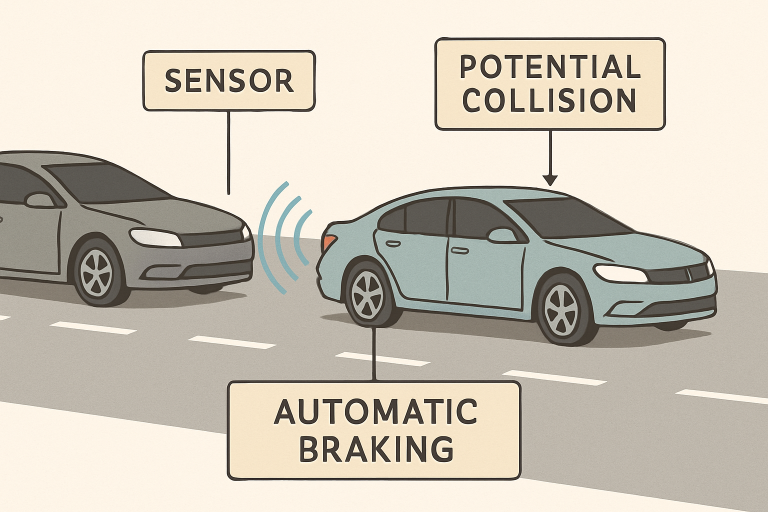
Automatic Emergency Braking (AEB) is quickly moving from a premium add-on to a required safety measure. The U.S. Department of Transportation recently passed regulations requiring new vehicles to have AEB systems within the next five years. These systems automatically apply the brakes when an imminent collision with another car or a pedestrian is detected, significantly reducing the number and severity of crashes. According to the National Highway Traffic Safety Administration (NHTSA), this measure could save hundreds of lives each year and prevent thousands of injuries. The standardization of AEB underscores the federal government’s commitment to advancing road-safety technologies as a foundational requirement rather than a luxury.
Rising Repair Costs and Total Loss Declarations
As vehicles become technologically advanced, their construction and repair naturally grow more complex. A single cracked bumper or damaged sensor can require replacing intricate electronics and recalibrating multiple safety systems, drastically increasing repair bills. In 2023, it was reported that more than a quarter of all vehicles involved in a collision were declared total losses. This spike (a record high of 27%) is directly due to higher repair costs outpacing the actual value of many cars and trucks, according to a recent New York Times report. Insurance premiums have also risen in response, as providers adjust to the more frequent need for vehicle replacements instead of traditional repairs.
Changing Accident Liability and Insurance
The digital revolution in car design is fundamentally altering how liability is determined after a crash. Today’s cars collect reams of data from sensors, cameras, and event data recorders. When a collision occurs, this information often takes precedence over witness statements or the drivers’ own recollections. Insurers, attorneys, and courts increasingly depend on these precise digital records to assign fault. This shift can complicate legal claims, especially when drivers misunderstand or over-trust their semi-autonomous vehicle systems. The influence of vehicle telemetry on accident analysis is still evolving and may affect both premiums and the way claims are adjudicated in the future.
Future Trends in Vehicle Safety
In the coming years, artificial intelligence and predictive analytics are set to redefine vehicle safety. AI-driven features will work to anticipate road hazards and encourage proactive driving adjustments, rather than reacting to threats already in progress. Manufacturers are also focusing on inclusivity by updating crash test procedures to represent a wider range of body types, an investment that could save even more lives.


As the automation trend accelerates, it’s crucial for drivers to keep pace with innovations in automobile safety. Understanding the benefits and challenges of these technologies helps those on the road make informed choices, supports the effective use of insurance policies, and guides injury and accident claims. From fewer collisions to evolving legal responsibilities, the automotive industry’s transformation underscores the importance of staying educated and prepared for the future of driving.