Negligence on the Road: How the Law Handles Traffic Accidents
Learn how courts determine negligence in traffic accidents and how legal responsibility for injuries, property damage, and financial losses is decided after a crash.
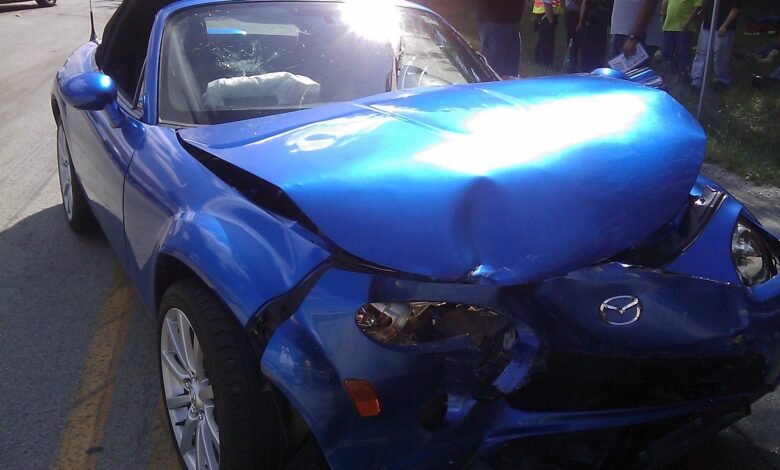
Safety campaigns or numbers often dominate the open discussion of traffic-related accidents. However, the legal system tackles the issue in a different manner. Courts are not as concerned with the dramatics presented by a crash, but whether the circumstances qualify as the legal definition of negligence.
This determination defines the financial responsibility of injuries, damages to property and other losses. Investigating the way the law examines accidents reveals why numerous collisions emerge as complicated court cases.
Negligence Is a Question of Conduct, Not Just Outcome
In legal terms, negligence occurs when a driver fails to exercise reasonable care while operating a vehicle. However, negligence is not determined merely by the existence of a crash. Courts investigate the sequence of the decisions that preceded the collision. A driver who over speeds on a busy crossing, uses a phone when driving or disobeys traffic lights might have violated the duty of care towards other motorists.
Legal investigation is concerned with conduct and not with consequence. Two crashes might seem alike, but the outcome can be different based on how each motorist acted before the collision.
How Courts Reconstruct What Happened
Investigating negligence is not as simple as making assumptions of fault. Courts use evidence to reconstruct the chronology of events. The first framework is provided by police reports, scene photos, car damage, and eyewitness statements.
Courts may resort to neutral third parties like accident reconstruction experts in more complex cases. They examine braking lengths, road surfaces, angles of impact, and other technical aspects to come up with an objective description of the crash. Their analysis explains if the driver reacted too late, misjudged the distance, or lost control.
Shared Fault and the Allocation of Responsibility
Traffic accidents seldom have perfectly innocent and perfectly guilty parties. Many cases include overlapping mistakes by multiple drivers. One driver may have been speeding while the other changed lanes unsafely. Courts analyze the contribution of every action that led to the collision.
This comparative fault process determines how liability is distributed. The share of liability attributed to individual drivers influences the amount of compensation they recover through insurance claims or legal proceedings.
The Role of Legal Representation in Accident Claims
Insurance companies are at the centre of settling traffic accidents disputes, but their decisions on fault are not final. Insurers evaluate risk meticulously and might contest claims in case of ambiguous evidence. That is why people living in busy regions like Tucson seek guidance from a Tucson car accident lawyer. They explain how negligence standards apply to their case and whether the evidence supports legal action. Legal professionals:

- Evaluate documentation
- Negotiate with insurers
- Determine if litigation is necessary
How Early Decisions Shape Legal Outcomes
The hours that follow a collision are likely to determine the strength of a claim. Drivers who do not collect evidence, get witness contacts, or seek immediate medical assistance end up undermining their own legal position.
Lawyers note that many claims are complicated by preventable post-accident mistakes made during this stage. Even innocent utterances cause trouble. Groveling or pondering about blame can be construed as an acknowledgment of guilt, which insurers or opposing counsel can use.
Endnote
Traffic accident law is based on responsibility. Courts do not simply acknowledge that there was a collision, they look into whether certain choices posed an unreasonable risk to others. In case negligence is established, monetary responsibility ensues since the legal system considers careless driving as avoidable harm.