The Homebuyer’s Title Checkup: A 2026 Guide To Hidden Ownership Risks Before And After Closing
Owner's title insurance protects homebuyers from hidden liens, ownership disputes, and legal claims that a home inspection cannot identify before closing.

Key Takeaways
- Buying a home means taking on its legal ownership history, not just its physical condition.
- A title search can identify many record-based problems, but it cannot promise that every future claim will be found.
- Lender coverage and owner coverage protect different interests.
- Costs, payment customs, and available coverage vary by state and transaction.
- Review title exceptions carefully and ask questions before signing closing documents.
Why A Title Checkup Belongs On Every Buyer’s List
A buyer can close on a beautiful home and later discover that a past contractor lien, tax issue, or ownership claim was never fully resolved. Those concerns may have begun years before the sale, and they are not the kind of problems a home inspection is designed to uncover. Understanding owner’s title insurance is one way buyers can prepare for legal risks connected to a property’s past.
A home inspection evaluates the condition of the building, such as the roof, plumbing, foundation, and electrical systems. A title review evaluates the legal condition of ownership. It examines recorded documents, liens, easements, prior transfers, and other matters that could affect the buyer’s rights after closing.
What A Property Title Actually Tells You
The title refers to the legal rights associated with property ownership, typically conveyed through a deed. The title history illustrates the progression of ownership through a sequence known as the chain of title. This chain may encompass various transactions such as ordinary sales, refinances, estate transfers, divorces, court orders, and mortgage releases. A title professional investigates relevant records to pinpoint any issues that require resolution or explanation before finalizing a transaction. Key records that may be scrutinized include prior deeds and legal descriptions, mortgage recordings, property tax records, liens related to judgments or contractors, easements, probate documents, and boundary information.
How Hidden Ownership Problems Can Surface
Not all title issues are severe, but even routine errors can cause costly delays. A prior owner might have paid off a mortgage without recording a release. A former spouse could claim an interest that was not addressed in a prior transfer. An heir might challenge a sale involving inherited property, or a deed may contain a misspelled name or an incorrect legal description. A title search aims to identify concerns in the record trail, but it doesn’t guarantee all claims, fraud, or undiscovered documents are eliminated. For a clear explanation of the difference between lender and owner protection, buyers can review the Consumer Financial Protection Bureau’s guidance on owner’s title insurance.
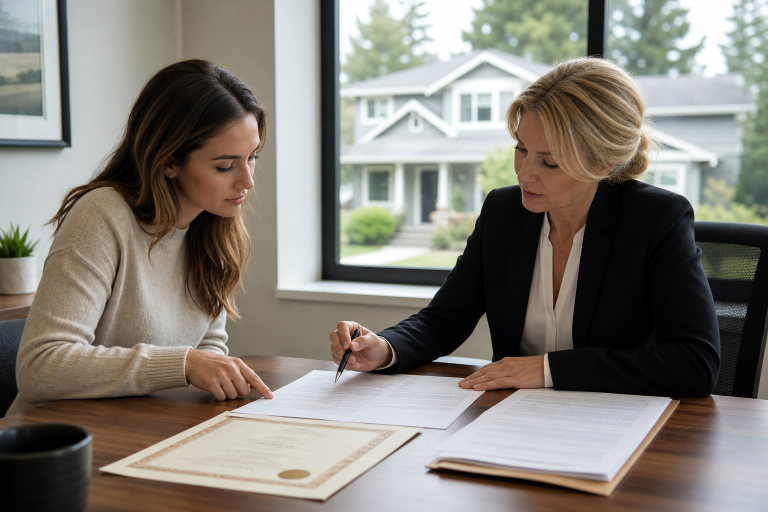
Common Title Issues Buyers Should Watch For
- Unpaid liens: A debt tied to prior work, taxes, or a court judgment may create a claim against the property.
- Unreleased mortgages: A loan that was paid may still appear open in public records.
- Ownership disputes: Another person may allege a legal interest in the home.
- Public-record errors: Incorrect names, signatures, or legal descriptions can cloud ownership.
- Undisclosed easements: A utility provider, government entity, or neighbor may have rights affecting part of the land.
- Forgery or fraud: A past document may not have been properly signed, authorized, or recorded.
- Boundary concerns: Fences, driveways, or structures may not align with recorded property lines.
Buyer Protection And Lender Protection Are Different
Buyers often see both a lender’s policy and an owner’s policy during closing, but they serve different purposes:
- Lender’s policy: Protects the mortgage lender’s financial interest in the loan. It is commonly required when a buyer finances the purchase.
- Owner’s policy: May protect the homeowner’s equity and legal ownership interest, subject to the policy’s terms, exclusions, limits, and exceptions.
A lender’s policy generally does not protect the buyer’s personal investment in the property. That is why buyers should not assume that a required lender policy automatically gives them the same protection.
What An Owner’s Policy May Cover
Coverage depends on the specific policy, endorsements, listed exceptions, and exclusions. In general, an owner’s policy may help with certain losses or legal defense costs when a covered title defect existed before the policy date.


Potential Areas Of Coverage
- Unknown pre-existing liens
- Past ownership claims
- Errors in the chain of title
- Defects in the execution or recording of earlier documents
- Some legal defense costs for covered claims
- Some financial losses resulting from a covered defect
For example, if an unpaid debt from a prior owner creates a valid claim against the home, the policy may help address it if the claim falls within the coverage provided.
What Title Coverage Usually Does Not Address
Title coverage is not a substitute for homeowners’ insurance, a survey, a home inspection, or legal advice. It generally does not address new physical damage, fire, theft, storms, or problems caused by the buyer after closing. It also may not cover matters the buyer already knew about or items specifically listed as exceptions.
Boundary, zoning, and survey concerns may require additional coverage or endorsements. Read the policy schedule and exceptions page closely. Those sections can be just as important as the general coverage language.
How The Closing Process Usually Works
- Available public records are gathered and reviewed.
- Potential concerns appear in a title commitment or preliminary report.
- The seller or another responsible party works to resolve identified problems.
- Remaining exceptions are disclosed before closing.
- Final lender and owner policies are issued after the transaction.
- The buyer stores the policy, deed, settlement statement, and related records safely.
Closing customs differ by state. Depending on local practice, the lender, title company, attorney, buyer, seller, or settlement agent may handle different portions of the process.
Cost, Payment, And Timing Questions
Title-related charges can exceed the policy premium. Buyers may see search, settlement, recording, notary, courier, and endorsement fees. Costs can depend on the purchase price, state rules, policy type, provider, and whether lender and owner policies are issued together.
Ask whether the owner’s policy is optional, who usually pays in the local market, whether the buyer can select the provider, and whether a simultaneous-issue discount is available. The premium is commonly a one-time closing cost rather than an annual renewal charge, but transaction details should always be confirmed before signing.
A Practical Review Before Signing
- Read the title commitment or preliminary report.
- Ask what each exception means in practical terms.
- Confirm that known liens and old mortgages have been released.
- Check names and the legal description for obvious errors.
- Ask about endorsements or enhanced coverage options.
- Compare the final charges to the Loan Estimate and the Closing Disclosure.
- Confirm when and how the final policy will be delivered.
Questions Buyers Should Ask At Closing
- What does the owner’s policy cover in this transaction?
- Which risks are excluded or listed as exceptions?
- Who is responsible for resolving any open lien?
- Who selected the title provider, and can the buyer shop?
- What should the buyer do if a claim appears later?
- Does refinancing affect the existing owner’s policy?
Real Estate Scenarios Worth Considering
An older home may have a longer record trail and more past transfers to review. New construction can involve contractor liens or land-transfer questions before the home is sold. Inherited property may require close attention to probate documents and heirship issues. Buyers facing a complex history, high-value property, or unclear records may benefit from seeking transaction-specific guidance from a qualified real estate attorney or professional.
Final Decision Checklist
- Know which policy protects the lender and which may protect the owner.
- Review exceptions before closing, not afterward.
- Ask who pays and whether costs are negotiable.
- Keep final title documents in a secure location.
- Seek clarification whenever the ownership history is unclear.
Conclusion
A title checkup helps buyers look beyond the home itself and understand its legal history. By reviewing title documents, distinguishing between lender and owner protection, and asking direct questions before closing, buyers can make a more informed decision in 2026.