The Power of Neutral Third Parties in Conflict Resolution
Neutral mediators help resolve conflicts peacefully. Learn how Florida mediation supports open communication, trust, and lasting resolutions.

Key Takeaways
- Neutral third parties facilitate open and constructive communication in disputes, creating opportunities for resolution.
- They bring objectivity to conflict by balancing interests and encouraging fairness.
- Their involvement can help preserve important relationships and support future collaboration.
- Trust and mutual understanding are central to successful conflict resolution processes involving neutral mediators.
Conflicts are a natural part of life and often arise in settings such as workplaces, communities, and families. How these disputes are managed can make the difference between ongoing tension and lasting, cooperative solutions. Neutral third parties, including mediators and facilitators, serve an essential function in helping people navigate these challenging situations. When individuals or organizations face conflict that feels insurmountable, seeking help from professionals skilled in Florida mediation can offer a constructive pathway forward.
Neutral third parties empower all sides to communicate openly and work through disagreements respectfully. Their impartial oversight enhances trust in the process and enables everyone to feel heard and understood. The ability of mediators and facilitators to manage discussions effectively is instrumental in achieving resolutions accepted by all parties.
These conflict experts do more than guide conversations. They provide a safe, structured environment where deep-rooted issues can be addressed. Whether a dispute involves business interests, family matters, or neighborhood concerns, involving a neutral third party brings clarity to chaotic or emotionally charged situations.
Incorporating professional mediation increases the likelihood of reaching lasting, mutually beneficial agreements for all involved. By inviting fairness and objectivity into the process, neutral third parties help communities, businesses, and families move forward with confidence and cooperation.
Facilitating Open Dialogue
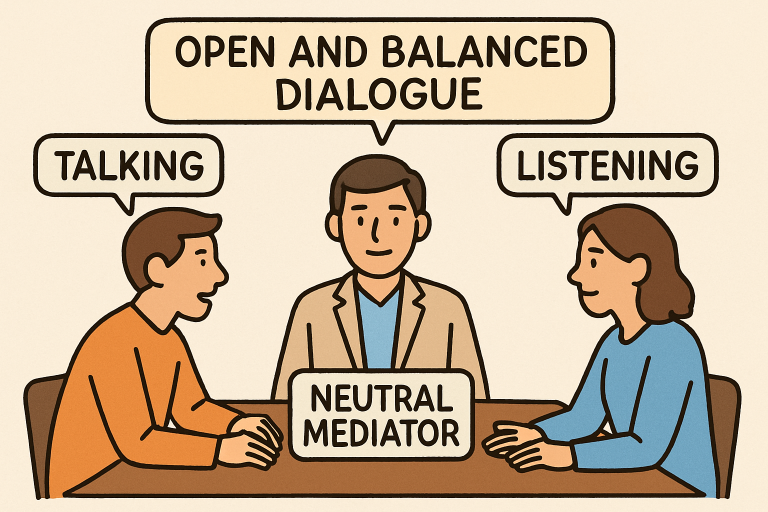
The breakdown of communication is both a cause and a consequence of many conflicts. When emotions are high, conversations can devolve into arguments or silence. Neutral third parties provide a structure and a set of ground rules that ensure everyone has a voice. Creating this safe space is vital for disputing parties to air grievances and concerns without fear of being dismissed or attacked. Mediation services help people understand the root of their disagreements and pursue creative, mutually acceptable solutions. Studies have shown that an impartial facilitator encourages not only honest expression but also empathetic listening, paving the way for more durable outcomes.
Balancing Conflicting Interests
Disputes are often complex, involving a web of intertwined interests. Neutral third parties help balance the process by ensuring no single perspective dominates. They guide both sides in identifying the core needs that must be addressed and in ensuring those needs are validated. This thorough and balanced approach moves the conversation away from adversarial stances and toward solutions everyone can accept. Agency and fairness are essential for participants to buy into and uphold any agreement reached. According to experts from the American Bar Association, mediation’s focus on fairness and self-determination improves the likelihood of compliance with settlement terms.
Preserving Relationships and Fostering Future Collaboration
One of the greatest benefits of using a neutral third party in conflict resolution is the ability to protect and even strengthen important relationships. Unresolved conflicts risk damaging professional partnerships, workplace morale, and community dynamics. Mediators and facilitators encourage parties to consider the long-term impact of their words and actions, thereby reducing hostilities and redirecting energy toward collaboration. They help everyone involved focus on shared interests rather than individual demands. When participants feel respected and valued, they are more open to future collaboration and less likely to resort to adversarial tactics when a disagreement arises again.


Encouraging Mutual Understanding
Developing mutual understanding is foundational for constructive solutions. Neutral third parties guide disputants toward empathetic, active listening. When people understand others’ motivations and viewpoints, tensions ease and defensive behaviors diminish. Third-party mediators reframe issues, clarify statements, and use probing questions to uncover the real drivers of conflict. As a result, solutions are not just imposed but genuinely crafted through understanding and cooperation.
Building Trust in the Process
Trust in the conflict resolution process is key to its success. Neutral third parties are trained to foster a transparent, collaborative environment where everyone can participate without fear of bias or reprisal. By being clear about the process and emphasizing equal participation, mediators promote a culture of fairness. This assurance often transforms skepticism into a willingness to engage. Over time, consistent transparency and impartiality build confidence, not just in the immediate process, but in the idea that peaceful conflict resolution is possible.
Conclusion
The involvement of neutral third parties fundamentally transforms the process of resolving conflicts. By fostering open dialogue, balancing diverse interests, preserving important relationships, promoting mutual understanding, and building trust, they lay the groundwork for fair, durable, and positive outcomes. Whether the disputes are between coworkers, neighbors, or business partners, the guidance of skilled mediators and facilitators brings clarity and hope. The emphasis on fairness and collaboration empowers all parties to find common ground and lay the foundation for future cooperation.