Las Vegas Car Accident Legal Representation: What Injured Drivers Should Know
Car accidents in Las Vegas can cause injuries, financial losses, and insurance disputes. Understand compensation claims and legal options after a collision.
Key Takeaways
- Prompt medical care, careful documentation, and early legal guidance can protect a Las Vegas car accident claim.
- An attorney can investigate fault, identify available insurance coverage, handle communications with adjusters, and value losses beyond vehicle repairs.
- Do not assume a quick settlement accounts for future treatment, missed income, or lasting limitations.
- Nevada deadlines and comparative-fault rules can affect whether and how much an injured person may recover.
- Complex crashes involving rideshare drivers, tourists, commercial vehicles, or uninsured motorists often require more detailed investigation.
A car accident can disrupt far more than a daily commute. In Las Vegas, a collision may leave someone dealing with medical appointments, vehicle repairs, missed work, insurance calls, and uncertainty about the next step. Understanding the process for seeking compensation for car accident injuries can help an injured person make informed decisions without rushing into an insurer’s first offer.
Legal representation is not only for catastrophic wrecks or cases headed to trial. A lawyer can be useful whenever fault is disputed, injuries are significant, multiple policies may apply, or an insurer is questioning treatment and losses. The goal is to create a clear, evidence-based account of what happened and what the crash has cost.
Why Legal Representation Matters After a Las Vegas Collision
Insurance companies investigate claims to evaluate coverage and financial exposure. Their adjusters may be professional and helpful, but they do not represent the injured person’s interests. An attorney represents the client, explains available options, and helps prevent avoidable mistakes during a stressful period.
Representation can be especially valuable when the other driver denies responsibility, a police report is incomplete, or injuries do not become apparent until days after the collision. It can also help preserve evidence before it disappears, including surveillance footage from nearby businesses, vehicle data, witness accounts, and photos of the scene.
What to Do After a Las Vegas Crash
Safety comes first. Check for injuries, call 911 when necessary, move out of active traffic only when it is safe to do so, and follow directions from emergency responders. Avoid arguing with the other driver or making statements that imply fault.
Document the Facts
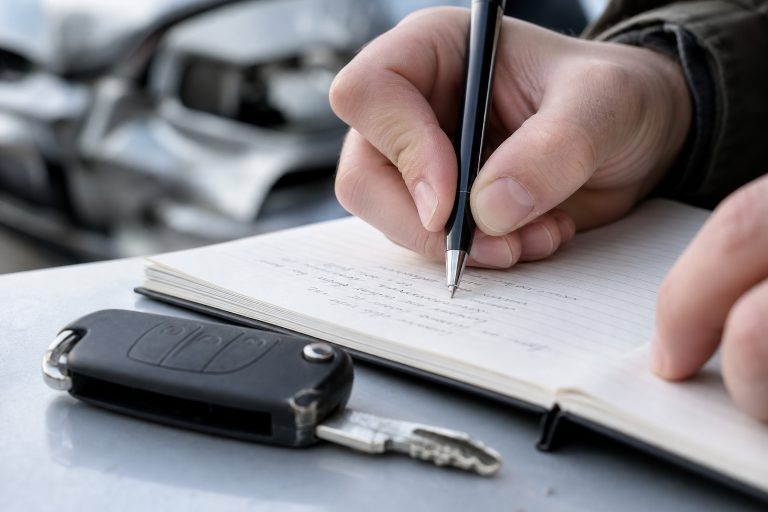
- Photograph vehicle damage, road conditions, traffic signals, debris, injuries, and license plates.
- Get names and contact information for drivers, passengers, and witnesses.
- Keep the responding officer’s information and the incident or report number.
- Save towing records, repair estimates, rental receipts, medical paperwork, and work-related records.
When law enforcement does not investigate a Nevada crash at the scene, a driver may be responsible for reporting duties. The Nevada DMV explains that its traffic crash report must generally be filed within 10 days if the collision involved injury, death, or more than $750 in property damage. Requirements depend on the facts, so it is wise to address reporting questions promptly.
Seek Appropriate Medical Care
Do not use vehicle damage as a measure of injury severity. Adrenaline can mask pain, and symptoms involving the neck, back, head, chest, or joints may develop gradually. Follow medical advice, attend recommended appointments, and describe how symptoms affect sleep, work, household tasks, and mobility. Consistent records can support both health decisions and a future claim.

How a Car Accident Lawyer Can Help
A Las Vegas car accident attorney typically begins by reviewing the facts of the crash, available insurance coverage, injuries, and immediate needs. From there, legal counsel may coordinate the following work:
- Reviewing police reports, photographs, witness statements, and available video footage.
- Communicating with insurers and tracking claim deadlines.
- Identifying every potentially responsible party and applicable policy.
- Collecting medical bills, treatment records, wage information, and proof of out-of-pocket losses.
- Evaluating settlement proposals and negotiating from a complete picture of damages.
- Preparing a lawsuit when a fair resolution cannot be reached through insurance negotiations.
Clients should still participate actively. Keep copies of all correspondence, be honest about prior injuries or accidents, avoid social-media posts about the crash or physical activities, and tell counsel about changes in symptoms, employment, or medical treatment.
Damages That May Be Part of a Claim
Every case is different, and no lawyer can responsibly promise a result. Still, a well-documented claim may consider more than the repair bill. Depending on the evidence and applicable law, losses may include medical expenses, future care, lost wages, reduced earning ability, property damage, rental transportation, pain and suffering, and loss of normal daily activities.
A settlement should account for the full impact of an injury, not simply the first emergency-room bill. Before signing a release, an injured person should understand that it typically resolves the claim and may prevent further payment, even if treatment continues.
Fault and Deadlines in Nevada
Nevada follows a comparative-negligence approach. In practical terms, a person’s own share of fault can reduce recovery, and recovery may be barred if that person is found more negligent than the opposing party or parties combined. This makes accurate evidence important, particularly in lane-change, intersection, rear-end, and multi-vehicle collisions.
Deadlines also matter. Nevada law generally provides a two-year period for an action seeking damages for personal injury or wrongful death caused by another person’s wrongful act or neglect, although exceptions can apply. The language of limitations appears in Nevada’s limitations statute, but the correct deadline can depend on the parties and circumstances. Waiting too long can jeopardize a claim.
Special Accident Situations
Rideshare and Tourist Collisions
Las Vegas has heavy visitor traffic and a large rideshare presence. In these cases, trip status, app records, driver classification, and multiple insurance policies may affect coverage. Preserve screenshots, receipts, booking details, and the names of all drivers and passengers involved.
Commercial Vehicle Crashes
Collisions involving delivery vans, buses, taxis, construction vehicles, or trucking companies may require quick action. Business records, maintenance histories, driver logs, onboard data, and company policies can become important. A prompt investigation can help preserve material that may not remain available indefinitely.
Uninsured Drivers and Hit-and-Run Accidents
Call police, document the location and vehicle damage, look for witnesses, and notify your own insurer. Uninsured or underinsured motorist coverage may be relevant, but policy terms, notice requirements, and available benefits vary.
Choosing Legal Counsel
When considering legal representation, ask practical questions. Find out who will handle day-to-day communication, how fees and case expenses work, what documents the firm needs, and how often updates will be provided. Choose a lawyer who explains the process clearly rather than one who guarantees a particular recovery.
After a Las Vegas car accident, the strongest next steps are usually straightforward: protect your health, preserve evidence, report the crash when required, keep organized records, and seek legal advice early if injuries, fault, or insurance coverage create uncertainty. Preparation cannot undo the collision, but it can help protect the ability to pursue a fair resolution.