Best 9 National Bicycle Accident Lawyers Compared
Bicycle Accident Lawyers Group represents injured cyclists in cases involving crashes, dooring, hit-and-runs, e-bikes, scooters, and other bicycle accidents.
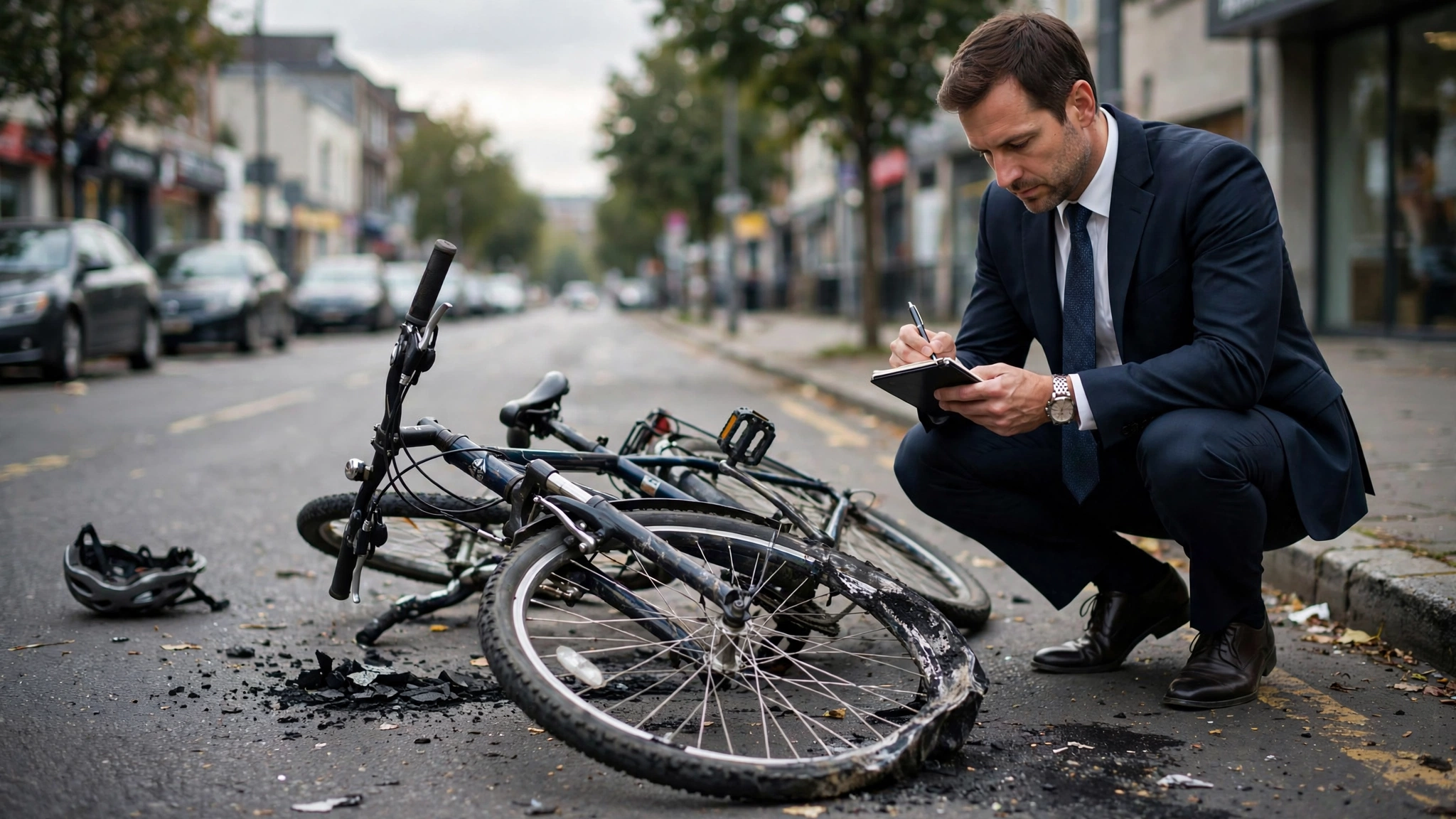
Motor vehicle crashes killed 1,166 cyclists on US roads in 2023, a 4% rise in one year (NHTSA, Traffic Safety Facts 2023: Bicyclists and Other Cyclists, July 2025). Another 49,989 riders were injured seriously enough to enter the federal estimate (NHTSA, Traffic Safety Facts 2023: Bicyclists and Other Cyclists, July 2025). Behind those numbers sits a crowded market of law firms advertising national representation, and the label conceals three different business models. This guide compares 9 bicycle accident attorneys and law firms with verifiable coverage claims. It covers what each one is, what it reports recovering, and which rider each model genuinely fits.
Why this ranking includes us. Bicycle Accident Lawyers Group is one of the firms compared below and appears first. Every entry, including its own, draws only from information published on that firm’s own site.
 Photo by Pixabay on Pexels
Which Firm Fits You?
Nine firms fit nine different situations. This quick reference matches each one before the full comparison below.
- Nationwide, bicycle-only practice: Bicycle Accident Lawyers Group
- Vetted local lawyer through one national network: Bike Law
- Multi-state reach, cycling-only firm: Bike Legal
- Catastrophic injury, need a nationally known trial brand: Ben Crump Law
- Oregon, want the trial lawyer himself: Michael Colbach
- New York, from bike-lane doorings to upstate crashes: Flanzig & Flanzig
- Massachusetts, want the longest track record: Jeffrey Glassman bike team
- California, serious injury with layered insurance: EB Cycling Law
- Chicago, want a small firm that only does this: Cameron and Kane
Every match above still needs the same retainer question: which attorney, licensed in your state, actually signs your file.
The 9 firms at a glance
These 9 firms range from a single bicycle-only nationwide practice to multi-state injury brands, and every one works on contingency. Every proof point in the table below is self-reported by the firm on its own site, retrieved July 31, 2026. Past results do not guarantee future outcomes.
| Firm | Coverage | Bike-only practice | Fee | Self-reported proof point |
|---|---|---|---|---|
| Bicycle Accident Lawyers Group | Nationwide | Yes | Contingency | Publishes state law hub, settlement calculator, and its own FARS crash research |
| Bike Law | 15+ states plus DC, via network | Yes | Contingency (per member firm) | Network of independent bicycle crash attorneys since 1998 |
| Bike Legal | 12 listed states, plus referrals | Yes | Contingency | “Well over 500 cycling accident claims” |
| Ben Crump Law | Licensed in DC, FL, GA, MO, NY, TN, TX | No | Contingency | City bicycle pages from Seattle to Miami |
| Michael Colbach | Oregon | Bike-centered injury trial practice | Contingency (33% settle / 40% trial, published) | “Over $81 million in verdicts and settlements in 20 years” |
| Flanzig & Flanzig | New York | Bike-led injury firm | Contingency (one third, published) | Partner chairs NY Bicycling Coalition board |
| Jeffrey Glassman bike team | Massachusetts | Bike team within injury firm | Contingency | Cyclist representation “since 1981” |
| EB Cycling Law | California | Cycling arm of injury firm | Contingency | “Over $500,000,000” across all injury cases |
| Cameron and Kane | Illinois | Yes | Contingency | Bicycle-first Chicago practice since 2016 |
Here is the pattern the comparison table conceals. “National bicycle accident lawyer” describes three different structures in 2026. One is a single group handling bicycle accidents coast to coast. The second is a network of independent local attorney-cyclists, and the third is a multi-practice injury brand licensed in a handful of states. The table shows the split: four of the nine run bicycle-only practices, and the other five are bike teams or arms inside broader injury firms. The structure determines who actually works your file.
The first four entries operate nationally. Entries 5 through 9 are the regional standouts, the firms to call in their own home territory. Ask one question before signing anything: which attorney, licensed in which state, signs my retainer.
1. Bicycle Accident Lawyers Group (Nationwide)
Right for: riders anywhere in the US who want a bicycle-only practice and a direct line to the attorney on their case.

Bicycle Accident Lawyers Group handles all kind of case related to bicycle accidents, a rider hurt because of what happened on the bike. That is broader than the classic car-versus-bike crash most people imagine. The reach covers dooring, a hit-and-run driver, an e-bike or e-scooter crash, and a dog attack that puts a rider on the pavement. The BALG represents injured cyclists coast to coast, and its published service promise is specific: same-day calls come from the person handling your case, not an answering service.
Instead of a headline recovery total, the group publishes its evidence. That evidence is a state-by-state bicycle law hub, a free, easy settlement calculator, and original crash data research built from federal fatality files. Robert Goldwater is the lead attorney. Cases in other states go to the group’s attorneys in the state where the crash happened. Fees are contingency only.
2. Bike Law (national network)
Right for: riders who want a vetted local lawyer who actually rides, found through one national door.
Bike Law is a network, not a single firm: its own site calls it “a network of independent bicycle accident attorneys and law firms who share a common approach” (bikelaw.com). Peter Wilborn devoted his practice to bicycle law after his brother was killed by a driver in 1998, and the network developed from that loss. The network lists member bicycle attorneys across more than 15 states plus Washington DC, and it runs a nonprofit advocacy arm, the Bike Law Foundation.
The structure carries a practical consequence. You retain the local member firm, and the network operates as the vetting layer, so fee terms come from that firm, not from Bike Law itself. Confirm the terms on the state page before you call.
3. Bike Legal (multi-state, cycling only)
Right for: riders in the West and Southwest who want a cycling-only firm with multi-state reach.
Bike Legal runs a cycling-only practice from Irvine, California, led by managing attorney Matt Danh. The firm lists cases across 12 states from California to New York (bikelegalfirm.com), and states it has handled “well over 500 cycling accident claims.” Its published results top out at $5 million for a rider’s leg injuries, with a $3 million recovery for a cyclist struck from behind (firm-reported).
However, part of that state list runs through named referral attorneys rather than in-house lawyers. Ask the same retainer question on the first call: which attorney, licensed in your state, signs the agreement.
4. Ben Crump Law (national brand)
Right for: catastrophic injury cases where a family wants a nationally known trial brand and its resources.
Ben Crump Law carries the biggest name on this list, and it maintains bicycle accident pages for cities from Seattle to Miami (bencrump.com). The firm’s homepage lists attorneys licensed in the District of Columbia, Florida, Georgia, Missouri, New York, Tennessee, and Texas, with local counsel behind its city pages.
Many people assume the biggest brand means the deepest bicycle practice. However, bicycle work sits outside the firm’s core practice areas, which center on catastrophic injury and civil rights litigation. For a wrongful death case or a life-changing bike crash that needs weight and publicity, the brand delivers resources and visibility. For a routine bike claim, ask which local attorney receives the file and what that attorney’s bicycle record shows.
5. Michael Colbach (Portland, Oregon)
Right for: Oregon riders who want the trial lawyer himself, not a case manager.
Portland bicycle attorney Michael Colbach’s site reports over $81 million in verdicts and settlements in 20 years, more than 140 jury trials, and 30 years of courtroom work (bicycleattorney.com). He is a former road and cyclocross racer who logs his commuting miles, over 30,000 of them, on the same Portland streets his cases come from.
Colbach practices solo, so the lawyer you retain is the lawyer who tries the case. He also publishes his exact fee, one of only 2 firms in this guide that do. The rate is 33% if the case settles, 40% at trial, both calculated after past medical bills are paid (bicycleattorney.com). For a contested-liability Oregon crash headed to a jury, ask Colbach directly how he plans to try that exact case.
6. Flanzig & Flanzig (New York)
Right for: New York riders, from city bike-lane doorings to upstate road crashes.
Flanzig & Flanzig is New York’s bike-law family firm, led by partners Daniel and Cathy Flanzig. The firm’s attorneys are avid cyclists and safe-street advocates, and the practice centers on injured cyclists (newyorkbikelawyer.com). Daniel Flanzig serves as board president of the New York Bicycling Coalition, founded the state trial lawyers’ bicycle litigation subcommittee, and also teaches bike law for Bike New York. The firm states it has secured multiple seven-figure verdicts and settlements for injured riders.
New York layers no-fault insurance rules on top of ordinary negligence law, and bicycle cases sit in the gaps between them. A firm that argues those gaps weekly is worth the call. Check its case criteria before you sign anywhere else.
7. Jeffrey Glassman bike team (Boston)
Right for: Massachusetts riders who want the longest track record in the room.
Attorney Andrew Fischer has represented riders hurt on bikes since 1981, the longest tenure on this list. He has also written amicus briefs for cycling advocacy groups and authored cyclist-protection laws (bikeattorney.com). He now leads the bicycle team at Jeffrey Glassman Injury Lawyers in Boston with Michael D’Isola and Jeffrey Glassman. The site puts the team’s combined experience representing Massachusetts cyclists at more than a century.
Advocacy work is not decoration here. A lawyer who helped write the rules reads a crash differently. If you are in New England, start with that phone call.
8. EB Cycling Law (California)
Right for: serious-injury California crashes where policy limits and stacked coverage decide the outcome.
EB Cycling Law is the cycling arm of partners Mike Bomberger and Brian Ellis, with California offices from San Diego to San Francisco (ebcyclinglaw.com). The firm states it has obtained over $500,000,000 in personal injury damages for clients, a figure that spans its entire injury practice, not bicycle cases alone. Bomberger has ridden city roads almost daily for 25 years, and the firm reports representing cyclists throughout California and beyond.
Serious bicycle accidents typically mean layered insurance: the driver’s policy limits, then your own underinsured motorist coverage, and even where fault is obvious in an injury case, identifying every layer is the skill. Ask whether the firm stacks your own underinsured motorist coverage on top of the driver’s policy limits before you sign.
9. Cameron and Kane (Chicago)
Right for: Chicago riders who want a small firm that only does this.
Cameron and Kane, the firm behind chicagobikelawfirm.com, has built a bicycle-first practice in Logan Square since 2016 (chicagobikelawfirm.com). Partners Colin Cameron and Scott Kane bring over 20 years of combined experience, and the fee wording on their site is as plain as it gets. No fees come out of your pocket, and the firm collects a percentage of the recovery it obtains.
Chicago’s dooring problem is a national case study, and a two-lawyer shop that lives on those Chicago streets knows the fact patterns cold. Small firm, narrow focus. For an Illinois crash, ask Cameron and Kane the same retainer question you would ask any firm here: who exactly handles your file.
How did we choose these 9 firms?
We chose these 9 firms through a review of what each one publishes and what the public record shows, not a keyword match. The candidate pool came from the national Google results for this search and the League of American Bicyclists attorney directory, pulled July 31, 2026. For every candidate we read the firm’s practice pages, attorney bios, and fee terms, checked the case results it publishes, and looked up its Google Business profile, client rating, and review count (checked August 3, 2026). Every firm then had to pass five tests, in this order:
- Bicycle focus. A practice actually built on bicycle accidents, not a general injury page decorated with a bicycle keyword.
- Riders on staff. Attorneys who cycle, stated on the record.
- Verifiable claims. Proof points printed on the firm’s own site that we could quote and attribute directly.
- Contingency fees. No upfront cost to an injured cyclist.
- Access. Signals that a client reaches an attorney, not only an intake script.
The review-score sweep told its own story. Seven of the nine hold at least one claimed Google Business profile, and their client ratings ran from 2.5 to 5.0 stars across more than 1,500 combined reviews (Google Business data, checked August 3, 2026). Two run no profile at all: Cameron and Kane, and our own group, which operates nationally without a single office to pin a score to. A star score reflects one office and one moment, so read it next to the retainer question, never instead of it.
The screen favors the experienced bicycle accident attorney over the advertising budget. Run any firm you are considering through these same five tests before you sign anything.
No firm paid for placement, and no firm reviewed its entry before publication: facts about other firms are their own public statements, quoted from their sites on July 31, 2026. Where a claim could not be verified on the firm’s own pages, it stayed out. We also excluded every firm whose bicycle credentials could not be separated from its general advertising. A coverage map without named attorneys tells an injured rider nothing about who answers the phone. Treat any firm’s unsourced “success rate” the same way: ask for the audit behind the number, or move on.
What does a bicycle-specific lawyer actually change?
A bicycle-specific lawyer changes the legal theory, not just the letterhead. Bicycle accidents turn on rules general injury firms rarely litigate: three-foot passing laws, dooring liability, and negligence per se, the presumption of fault written into the safety statute itself. This means fault is legally presumed when the driver broke the safety rule that caused the crash. If the driver who hit you violated a passing distance law in a state recognizing negligence per se, liability follows from the violation itself. Every negotiation afterward starts from that presumption, and an attorney who pleads those rules from day one changes the adjuster’s math.
The hit-and-run numbers demonstrate why this is not theory. Roughly one in four US bicyclist deaths from 2019 to 2023 involved a hit-and-run driver. The yearly share ran from 22% to 25% and stood at 23.5% in 2023 (BALG analysis hit-and-run bicycle accident statistics).
A fleeing driver converts your case into an uninsured motorist claim against your own policy: the motor vehicle at fault is gone, so your coverage stands in. The insurance company handles that claim knowing you feel like a customer, not a claimant. You are a claimant.
US bicyclist deaths, 2019 to 20238001,0001,2008569429711,0961,16320192020202120222023
Source: IIHS analysis of NHTSA FARS data, 2019-2023. NHTSA’s published 2023 pedalcyclist total, which also counts other cyclist types, is 1,166.
On the FARS measure above, bicyclist deaths climbed 36% in five years, and the legal market followed the harm. That is exactly why coverage claims deserve the scrutiny this guide applies. Every state bar runs a free public license lookup. Confirm the attorney’s standing and discipline history there, in the state where your crash happened, before you sign anything. Verify the lawyer the way an adjuster will verify you.
Are cyclist deaths still rising after 2023?
Cyclist deaths turned down in 2024, the most recent full year with final data. IIHS counted 1,075 bicyclists killed in crashes with motor vehicles that year, down 88 from the 1,163 deaths the same FARS-based count found in 2023. IIHS still calls that figure “the third-highest number ever recorded,” so one better year has not undone the climb charted above. A single down year does not retire the legal exposure a bad crash still carries. The evidence you still need to preserve does not change. Confirm the latest trend against your state’s own crash data before you judge what your case is worth.
Protect your bike accident claim before you call anyone
A bike accident claim is built in the first week, from evidence only you can preserve. This is not the Tour de France: no support car trails you to collect the proof. That work is yours.
Get the police report. Call 911, even if you feel fine. In many cases, the responding officers’ report frames the first fault conversation with the insurance company.
Photograph the scene. The vehicle, the road, and your injuries from multiple angles. Dooring cases turn on exactly where the car door opened, and crashes near driveways or parking lots turn on sight lines. Capture the license plate, then collect the driver’s insurance information before anyone leaves.
Seek medical attention the same day. Bicycle accident injuries surface late, and the medical record ties them to the crash. Your health insurance may later claim repayment from any settlement, so keep every bill.
Screen the lawyer like evidence. Read what former clients say about the bicycle attorney on independent review sites, not the firm’s own testimonials page, before you sign.
Do this before the first insurance company call. Your legal rights survive the crash. The evidence often does not.