Most Denver Car Accident Claims Settle Before Trial: What Court Data Really Means for Your Recovery
Most personal injury claims settle before trial through negotiation or mediation. Discover how injuries, evidence, collision facts, and insurance shape outcomes.
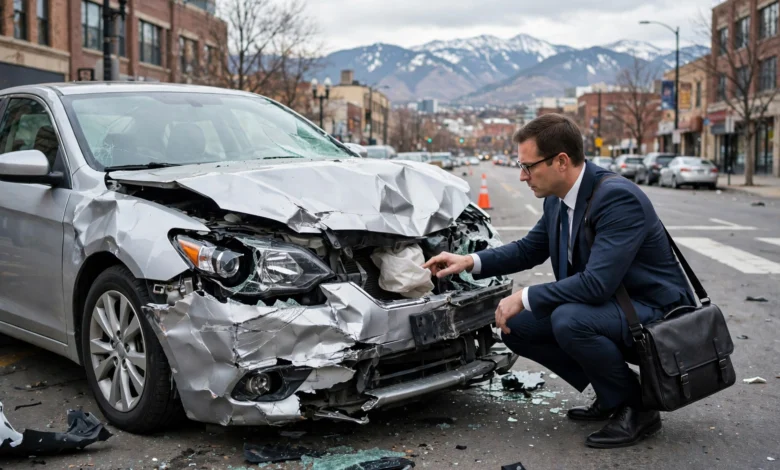
Most personal injury claims do not end with a courtroom trial. Instead, many are resolved through negotiations between the parties, sometimes with the help of mediation or other forms of alternative dispute resolution.
Court statistics can provide useful context about how often cases reach trial. However, broad court data should not be treated as a prediction of what will happen in an individual car accident claim. The facts of the collision, the severity of the injuries, the available evidence, and the insurance coverage involved can all affect how a claim is resolved.
Why Trials Are Infrequent
A car accident claim does not automatically proceed to trial simply because a lawsuit is filed. Parties may resolve the dispute through settlement negotiations or mediation before a judge or jury hears the case.
Trials can also involve significant time, expense, preparation, and uncertainty. As a result, both sides may have reasons to resolve a case without going through a full trial when they can reach an agreement.
Colorado’s court system provides public access to court information and publishes statistical reports that provide a broader picture of court activity. However, those statistics cover numerous types of cases and should not be interpreted as a specific trial rate for Denver car accident claims.
What Denver Court Data Can—and Cannot—Tell You
The Denver County Court publishes annual reports containing information about its overall caseload and court operations. Its 2024 annual report, for example, reports nearly 100,000 cases across the court’s various divisions and case types.
Those numbers provide useful context, but they do not establish that a particular percentage of Denver car accident claims settle before trial.
This distinction matters because court statistics can include civil, traffic, small claims, and other proceedings. A statistic showing that a certain number of cases reached trial cannot automatically be applied to personal injury lawsuits arising from car crashes.
The more useful takeaway is that court-wide statistics provide background, not a prediction for an individual claim.


Why Some Cases Settle and Others Go to Trial
Whether a car accident claim settles or proceeds toward trial depends largely on the circumstances of the dispute.
Important factors can include:
- Whether the parties agree about who caused the crash
- The strength of the available evidence
- The severity and documentation of the injuries
- The amount of medical treatment required
- Lost income and other financial losses
- Available insurance coverage
- Whether future medical care may be necessary
- How far apart the parties are in their valuation of the claim
- The cost and potential risks of continuing the litigation
For example, a claim involving clear evidence of liability and well-documented damages may be easier to resolve through negotiation. A case involving disputed fault, conflicting medical evidence, or significant disagreements about damages may require more extensive litigation.
What the Trial Rate Does—and Does Not—Tell You
A low trial rate should not automatically be interpreted as evidence that car accident cases are easy to resolve.
Cases may settle for many different reasons. The parties may agree about liability and damages, or they may decide that the risks and costs of continuing the dispute outweigh the potential benefits of a trial.
Conversely, a case may continue toward trial even when one side believes the evidence is strong. The parties may simply disagree about the value of the claim or who should be responsible for the losses.
That is why a general trial statistic cannot tell you whether your claim is likely to settle or how much it may be worth.
Which Questions Matter More Than Trial Statistics?
Instead of focusing on the overall percentage of cases that reach trial, consider the circumstances of the individual claim.
Questions that may be more useful include:
- Is liability supported by clear evidence?
- Are the injuries properly documented?
- Is medical treatment ongoing?
- Are future medical expenses expected?
- Have lost wages or other financial losses been documented?
- What insurance coverage is available?
- Does the other party dispute the amount of damages?
- Would continued litigation be proportionate to the potential recovery?
These factors provide a much better framework for understanding the potential path of a claim than a general court-wide trial statistic.
Why Time Still Matters
The amount of time a claim takes can matter even when the parties ultimately reach a settlement.
Medical treatment may continue for months. Additional medical bills may arrive. Repair costs may change. Witnesses may become harder to locate, and memories can become less precise as time passes.
Crash reports and other official records can also take time to obtain or review, particularly when an investigation involves additional evidence or multiple parties.
For that reason, keeping records organized from the beginning can make it easier to track how the claim develops.
How Denver Court Procedures Fit Into the Process
A crash report can provide important information about the collision, but it is only one piece of a larger claim.
Depending on the circumstances, a claim may also involve:
- Medical records
- Photographs and video
- Witness statements
- Vehicle damage documentation
- Insurance correspondence
- Employment and wage records
- Expert opinions
- Other evidence relevant to liability or damages
If the parties cannot reach an agreement, the dispute may eventually move further into the court process. At that point, the evidence gathered during the earlier stages of the claim can become particularly important.
Why Colorado’s 2025 Damages-Cap Change Matters
Colorado changed its statutory limit on noneconomic damages through HB 24-1472. For civil actions filed on or after January 1, 2025, the general cap on damages for noneconomic loss or injury increased from $250,000 to $1.5 million, with adjustments for inflation scheduled to begin in 2028. The law also contains specific rules and exceptions for certain types of claims.
This change can be relevant when evaluating the potential value of certain injury claims. However, the existence of a higher statutory cap does not mean that every injured person can recover up to that amount.
The actual value of a claim depends on the facts, the evidence, the nature and severity of the injuries, applicable law, and available insurance or other sources of recovery.
The change also does not make trial inevitable. A claim can still be resolved through settlement even when substantial damages are involved.
How to Interpret Denver Court Data
Court statistics can help explain the broader environment in which a case may be handled, but they should be interpreted carefully.
The most reasonable conclusions are:
- Court-wide statistics do not provide a specific settlement or trial rate for Denver car accident claims.
- Many civil disputes are resolved without a trial, but the reasons for settlement vary.
- The strength of the evidence and the extent of the damages are more relevant to an individual claim than a general trial statistic.
- A case that settles is not necessarily a weak case, and a case that proceeds to trial is not necessarily a stronger one.
- Changes to Colorado’s damages laws may affect the potential value of some claims, but they do not determine the outcome of an individual case.
In other words, court data can provide context, but it cannot tell you what your particular claim is worth or whether it will settle.
When to Seek Legal Counsel
After a crash, it can be difficult to evaluate the strength of a claim while also dealing with injuries, medical treatment, insurance communications, and other practical concerns.
Legal guidance may be particularly useful when:
- Liability is disputed.
- The injuries are serious or ongoing.
- Future medical treatment may be necessary.
- The insurance company disputes the extent of the losses.
- Multiple parties may share responsibility.
- Available insurance coverage may not fully address the losses.
- The claim has progressed toward litigation.
A Denver car accident lawyer can review the available evidence, explain how Colorado law may apply, and help you understand the potential options for resolving the claim.
Final Thoughts
Court data can help put Denver’s legal system into perspective, but broad statistics should not be mistaken for a prediction about an individual car accident claim.
Whether a claim settles or proceeds toward trial depends on the specific circumstances, including liability, medical evidence, financial losses, insurance coverage, and the parties’ willingness to reach an agreement.
For someone recovering from a serious crash, the more important task is to preserve relevant evidence, document injuries and expenses, understand the available insurance coverage, and evaluate the claim based on its own facts.
If significant injuries, disputed liability, or complicated insurance issues are involved, obtaining legal guidance can help you better understand your options and make informed decisions about the next stage of your recovery.